Theoretical Physicist
Albert Einstein
Albert | Incarnでアニメーション化
Incarnによるアニメーションポートレート
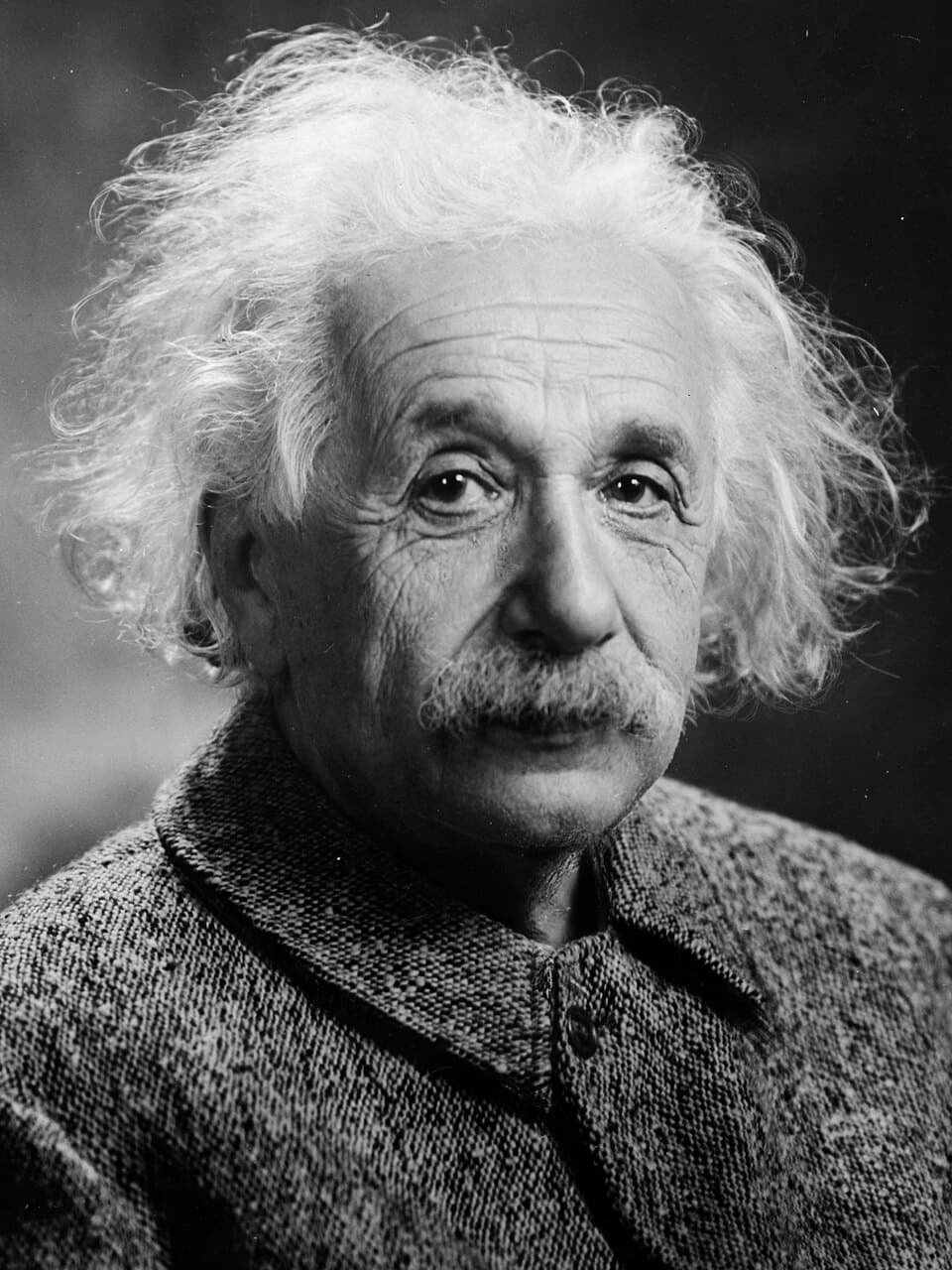
Albert Einstein was born in Ulm, Germany in 1879. As a child he showed a deep curiosity about the natural world -he later recalled being fascinated at age five by a magnetic compass, wondering what invisible force kept the needle pointing north. Despite this inquisitiveness, he struggled with the rigid rote-learning methods of his early schools.
In 1905 -often called his 'miracle year' -Einstein published four groundbreaking papers while working as a patent clerk in Bern. These papers introduced the special theory of relativity, established the equivalence of mass and energy (E=mc²), explained the photoelectric effect, and provided evidence for the existence of atoms. Each one alone would have secured a place in history.
His general theory of relativity, published in 1915, reimagined gravity not as a force but as a curvature of space-time caused by mass. The theory was dramatically confirmed in 1919 when observations of a solar eclipse matched his predictions, making Einstein an international celebrity overnight. He was awarded the Nobel Prize in Physics in 1921.
When Hitler rose to power, Einstein -who was Jewish -was in the United States and chose not to return to Germany. He joined the Institute for Advanced Study in Princeton and spent his remaining years working toward a unified field theory. His 1939 letter to President Roosevelt warning of the possibility of nuclear weapons helped initiate the Manhattan Project, a decision Einstein later described with regret.
ご自身の写真もアニメーション化しませんか?
私たちの技術はあらゆる歴史的肖像画に命を吹き込めます。ご家族の写真でもお試しいただけます。古い写真をアップロードして、歴史が動き出す瞬間をご覧ください。
写真をアニメーション化(無料)